Fewer animal studies, more pressure on the bench
FDA’s new rule widens the door for organoids, organ-chips and other human-relevant methods. Here’s what it means for the labs that run them.
On September 21, FDA updated its regulations to make room for testing methods built on human cells, organs-on-chips and computer models, and launched a database of 25 examples drawn from its own review materials. It’s the latest step in a plan the agency began in April 2025, when it said animal testing for monoclonal antibodies and other drugs would be reduced, refined, or potentially replaced.
Preclinical labs have been asking what this means for them. Here are the short answers.
Does the rule ban animal studies?
No. FDA says the rule doesn’t eliminate or prohibit animal studies, change evidentiary standards or add new requirements. What it adds is flexibility: developers can choose the method that best answers their scientific question.
So what’s the catch?
Evidence. A new method only replaces an old one when regulators trust its results, and trust means validation. FDA’s March draft guidance exists to help developers validate these new approach methodologies for use instead of animal testing, and it encourages talking to the relevant review division early.
Why is validation hard?
Because many of these methods are sensitive to how they’re run. A consensus guideline from Korea’s Organoid Standards Initiative notes that organoid production can vary widely between laboratories, with low reproducibility and no internationally agreed quality standards. It traces the problem to differences in protocols, reagents, equipment and research environments.
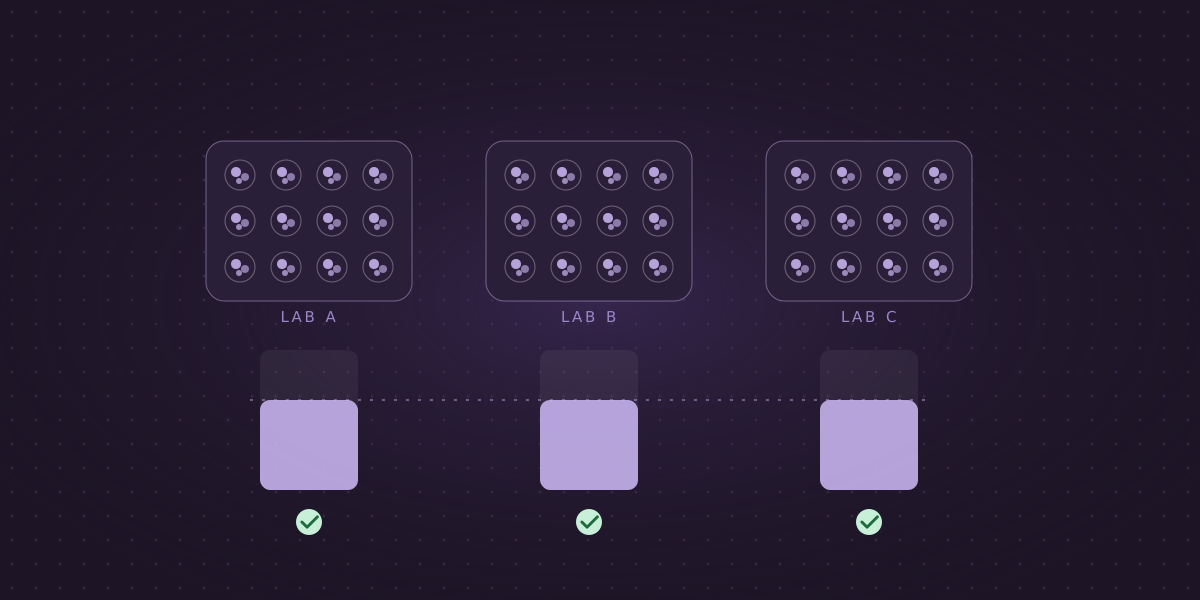
Those are bench-level variables. Two labs can follow the same written protocol and still differ in passage timing, matrix handling or how gently they mix — and the readout will show it.
A method is only as reliable as the record of how it was run.
What does that mean for labs?
The labs that win this work will be the ones that can show — not just state — that an assay ran the same way every time. In practice:
- Step-level records for every run, so variation can be traced to a cause instead of argued about.
- Deviations captured and resolved, so a failed plate is explained rather than quietly repeated.
- Materials tied to results, including lots, passages and instruments.
- Comparable runs across sites, so a sponsor can see that two labs really did the same thing.
Where does Augmentiv come in?
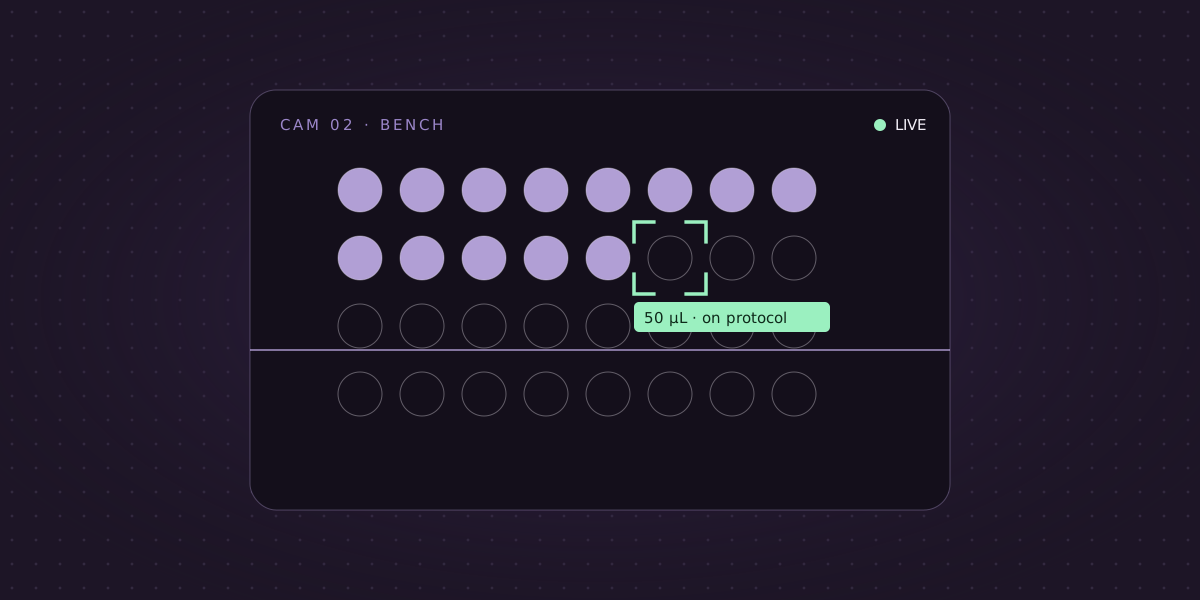
Augmentiv guides each step on a tablet, records the bench with an off-the-shelf camera and produces a verified run record automatically. Nothing is installed on instruments, which helps when a lab is standing up a new organoid or chip assay quickly. For contract labs, the record doubles as evidence biotech sponsors can review for themselves. Read how we work with labs →
- U.S. Food and Drug Administration. “FDA updates regulations to advance innovative alternatives to animal testing.” Press release (Sep 21, 2026).
- U.S. Food and Drug Administration. “FDA announces plan to phase out animal testing requirement for monoclonal antibodies and other drugs.” Press release (Apr 10, 2025).
- U.S. Food and Drug Administration. “FDA releases draft guidance on alternatives to animal testing in drug development.” Press release (Mar 18, 2026).
- Ahn, S.-J. et al. “Essential guidelines for manufacturing and application of organoids.” International Journal of Stem Cells 17, 102–112 (2024).