The road to the autonomous lab runs through the bench
A busy month for AI that designs and runs experiments points to one lesson: machines can only automate work that someone has captured.
In the space of two weeks, three groups showed what an AI-run lab might look like. Researchers at Chalmers described an AI scientist that plans yeast experiments and turns its hypotheses into step-by-step, machine-readable instructions for lab equipment. Danaher announced plans for its first AI-powered autonomous lab, aimed at custom antibodies and other molecular tools. And on October 16, Google Research set out the building blocks it is using for autonomous wet labs.
It is tempting to read this as a story about robots replacing benches. Read the details and a different story comes through. Every one of these systems depends on knowing exactly how a step was done — and on catching the moment it wasn’t.
The hard part is still physical
Google’s team is candid about where the difficulty lies. Its framework, VERID, keeps a live model of the robot’s deck — well volumes, reagents, tips — and simulates each protocol before anything moves, because an agent can write code that looks valid but is physically impossible, like aspirating from a depleted well.
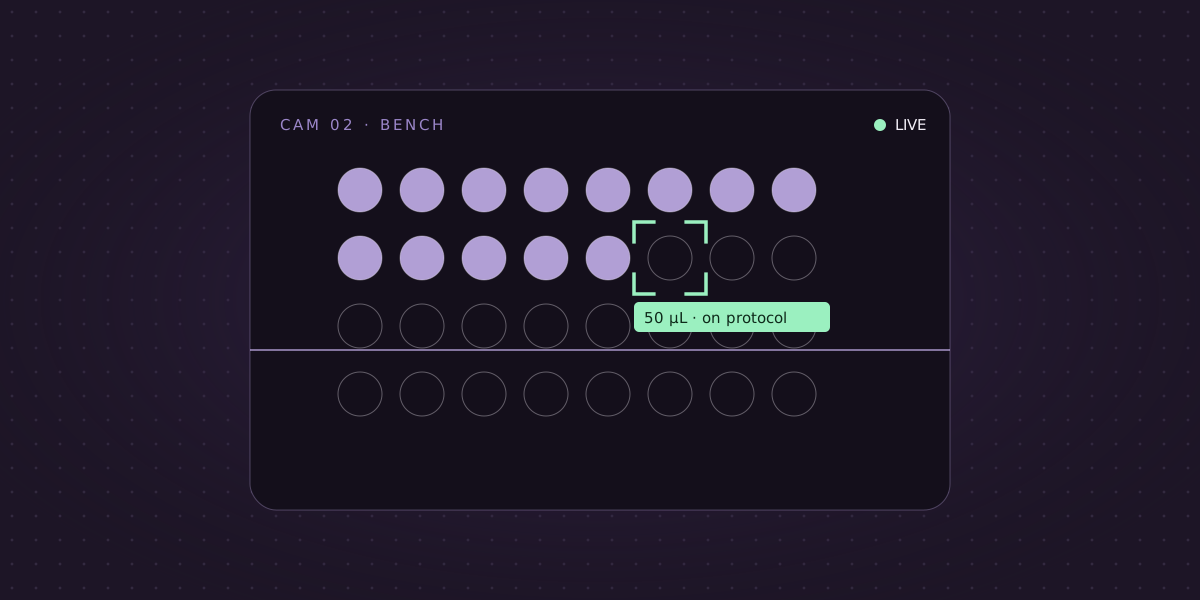
The most telling results are small ones. In one case study, video and execution logs showed that dye had been dispensed too close to the well floor, leaving the mix unevenly layered. In another, a targeted experiment exposed a subtle bias from liquid carried over on the tip wall. These are the details a careful scientist learns over years, and the ones a written protocol almost never mentions.
A robot can only repeat a step that someone has described precisely enough to repeat.
The record came first
Notice what made those catches possible: a complete, time-aligned record of the run. Google lists synchronized video and action logs among VERID’s four core capabilities, for rigor, reproducibility and debugging. Before the autonomous lab can do anything clever, it has to do what manual labs have always struggled with — record every step as it happens.
That matters for the many labs that won’t have a robotic workcell any time soon. When the Reproducibility Project: Cancer Biology set out to repeat published experiments, none of the 193 it planned were described in enough detail, and 67% of the protocols needed modification once work began. Automation inherits that gap. If the method lives only in someone’s hands, there is nothing for a robot — or an agent — to read.
People stay in the loop
None of these systems removes scientists. Google’s safeguards have humans authorize designed sequences, verify wet-lab protocols and supervise robot runs, and its protein-design work found that a scientist setting strategy, with an agent handling execution, nearly doubled the in-silico hit rate of the scientist working alone. The near-term lab is a mixed one: people doing expert manual work, robots taking routine steps, and AI proposing what to try next. (If you’re building models for the lab, here’s how we work with AI teams.)
What labs can do now
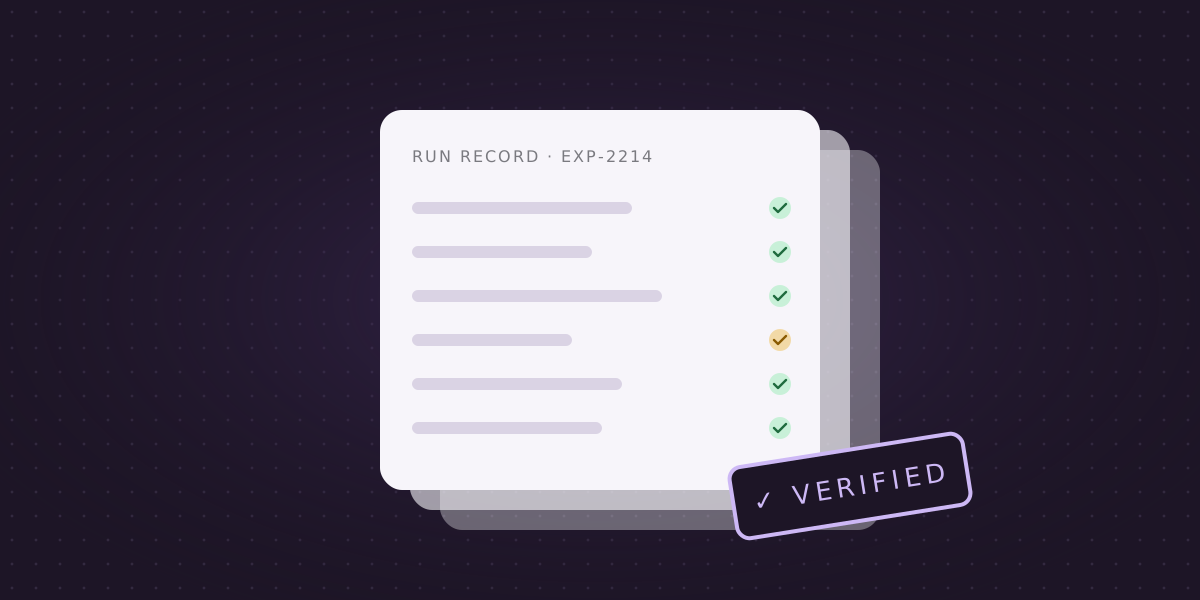
You don’t need an autonomous lab to get ready for one. The groundwork is the same work that makes results trustworthy today, starting with a run record for every result:
- Capture steps as they happen. A time-stamped record of each action, not a write-up at the end of the day, is what an automation team — or an auditor — can actually use.
- Keep the deviations. Near-misses and fixes are the most valuable part of the record. They are where the unwritten know-how lives.
- Tie data to the run. Results mapped to the samples, instruments and materials that produced them are ready for a sponsor to trust, and for a model to learn from.
- Decide what leaves the lab. Be explicit about it. At Augmentiv, quantitative results are never trained on or shared.
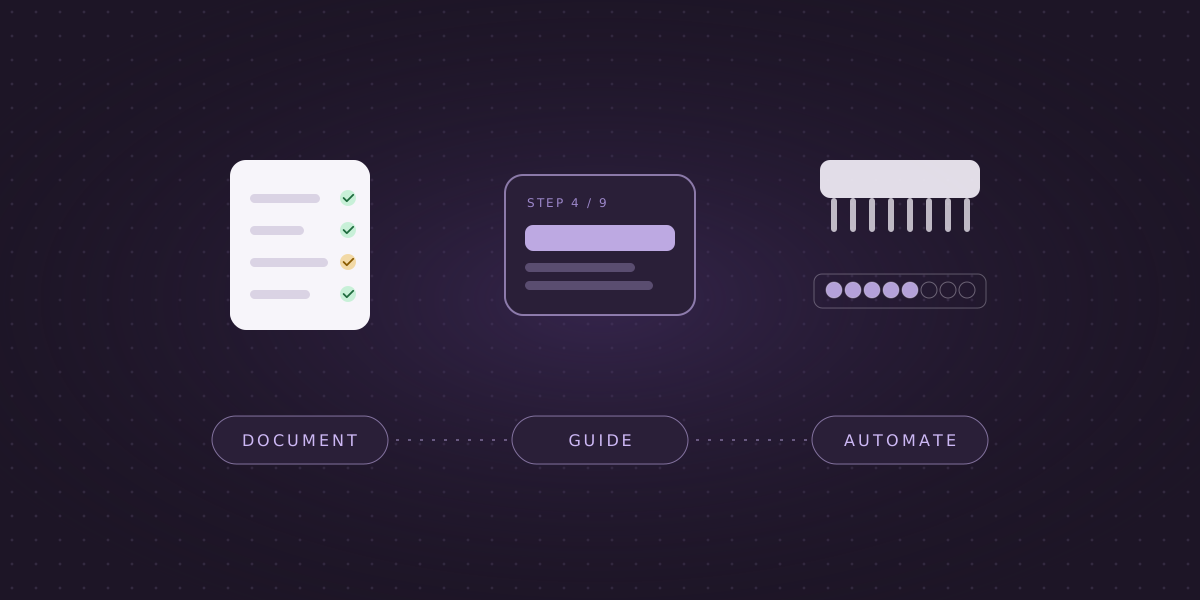
That is the path we’re building: document the work first, guide it live, and over time help automate the steps that are ready. See how the platform works →
- Rao, P., Sirkovic, P. & Pawlosky, A. “Grounding AI agents in biological reality: Building blocks for autonomous wet labs.” Google Research blog (Oct 16, 2026).
- CORDIS. “What happens when AI runs its own lab?” CORDIS – EU research results (2026).
- Danaher Corporation. “Danaher accelerates life sciences research with new AI-powered autonomous lab.” Press release (Oct 7, 2026).
- Errington, T. M. et al. “Challenges for assessing replicability in preclinical cancer biology.” eLife 10, e67995 (2021).