Introducing Augmentiv: proof of every experiment, without the paperwork
Today we’re opening Augmentiv to labs and research teams. Here’s what we’re building, and why it matters now.
Science runs on trust. When an experiment is done — in your own lab, at a contract research organization, or on the other side of the world — the result usually arrives as a file. The only evidence of how it was produced is whatever someone remembered to write down.
That has always been a weak link. Today it’s becoming the bottleneck. AI can now propose experiments faster than any lab can run them, and the value of every result depends on whether anyone can trust how it was made. We started Augmentiv to close that gap.
A problem everyone in science recognises
In a 2016 survey of more than 1,500 researchers by Nature, over 70% said they had tried and failed to reproduce another scientist’s experiment — and more than half had failed to reproduce their own. Those aren’t edge cases. They’re the everyday experience of working scientists.
When the Reproducibility Project: Cancer Biology set out to repeat 193 experiments from 53 high-impact cancer papers, it found that none of the 193 experiments were described in enough detail to design a replication without going back to the original authors. The knowledge of how the work was actually done simply wasn’t on the record.
The cost is real. One widely cited analysis in PLOS Biology estimated that roughly $28 billion a year is spent in the United States alone on preclinical research that can’t be reproduced — with laboratory protocols named among the main contributing factors.
Why now
Three things have changed. First, the hard part of science has shifted from generating ideas to running experiments and trusting the results. Second, cameras and computer vision have become good enough — and affordable enough — to follow skilled work at the bench. Third, the teams who rely on outsourced and distributed lab work increasingly expect to see how it was done, not just what came out.
What Augmentiv does
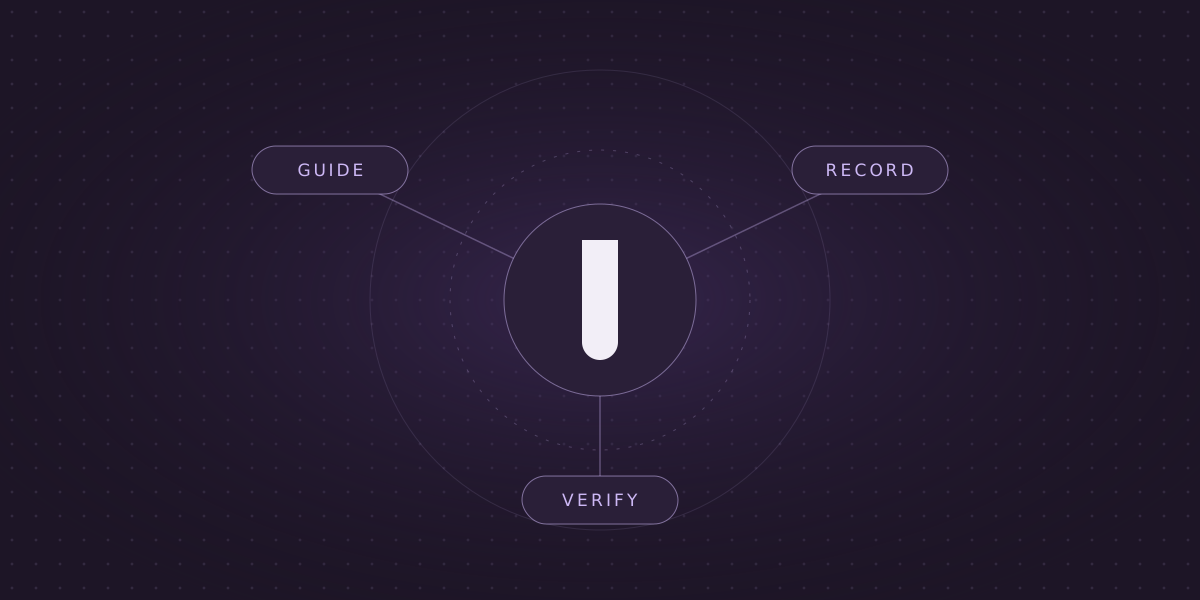
Augmentiv turns a lab protocol into a guided, recorded and verified run:
- Guide. Each protocol becomes step-by-step instructions on a tablet at the bench, so every operator — junior or senior — knows exactly what comes next.
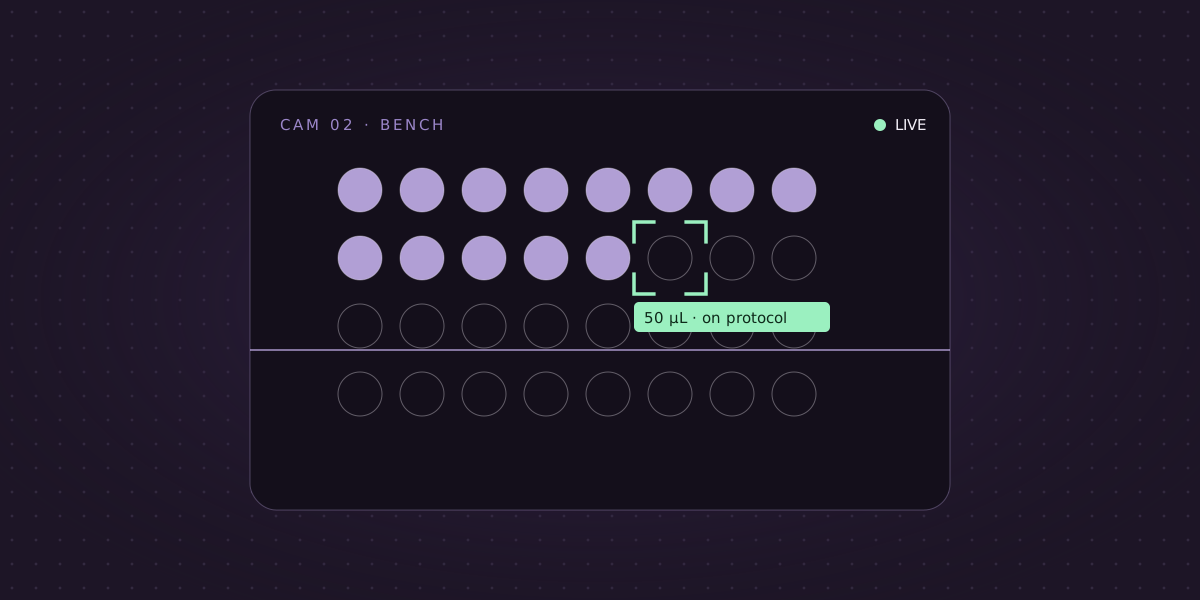
- Record. An off-the-shelf camera, captures each step as it happens. There are no changes to your instruments.
- Verify. Our models align every action to the protocol step it belongs to, flag anything off-protocol, and produce a verified record automatically.
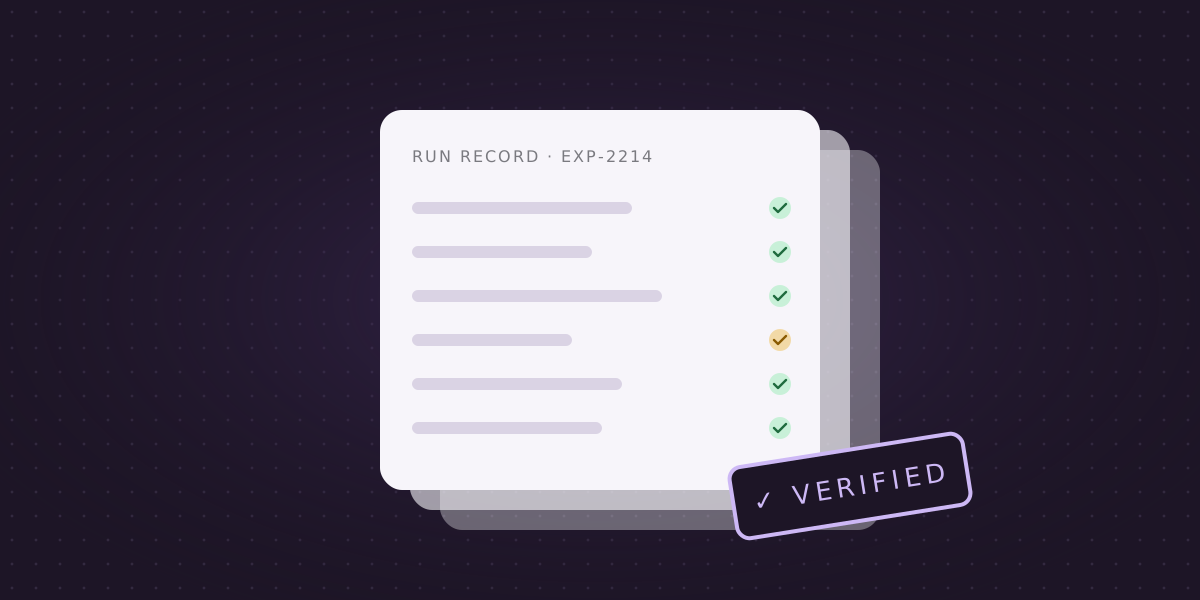
The output is a run record: a time-stamped account of every step, every deviation and how it was resolved, linked to the data it produced. It’s the difference between “trust us” and “see for yourself.”
We put AI’s eyes on the scientist — not to watch people, but to prove the work.
Who we’re building for
We’re building for two groups who need the same thing. Labs — CROs, CDMOs, core facilities and in-house teams — need to spend less time documenting and more time running experiments. The teams who rely on them — biotech and pharma programs, academic groups, and AI teams testing what their models design — need to know a result was produced the way it was meant to be. A shared, verified record serves both. You can see how each group uses Augmentiv on our solutions page.
Built with labs, not on them
Cameras frame the bench — hands, tools, samples and instruments — not faces or the wider lab. Quantitative experimental results stay with the lab: we never train on them or share them. Footage is never used to monitor or rank individual operators. You can read more in our piece on computer vision at the bench and on our security & privacy page.
What comes next
Our path is simple: document the work first, then guide it live, and over time help automate it. Along the way, the hours labs get back from documentation become capacity — and we’ll help fill it with well-specified work from biotech, academic and AI research teams who need experiments run.
If you run a lab, or rely on one, we’d love to show you what that looks like. Book a demo, or learn how labs work with us.
- Baker, M. “1,500 scientists lift the lid on reproducibility.” Nature 533, 452–454 (2016).
- Errington, T. M. et al. “Challenges for assessing replicability in preclinical cancer biology.” eLife 10:e67995 (2021).
- Freedman, L. P., Cockburn, I. M. & Simcoe, T. S. “The Economics of Reproducibility in Preclinical Research.” PLOS Biology 13(6) (2015).