BIOSECURE means more tech transfers. Plan the handoff now
A list of restricted biotech companies is due around year-end. Sponsors moving work to new labs should start with the method, not the contract.
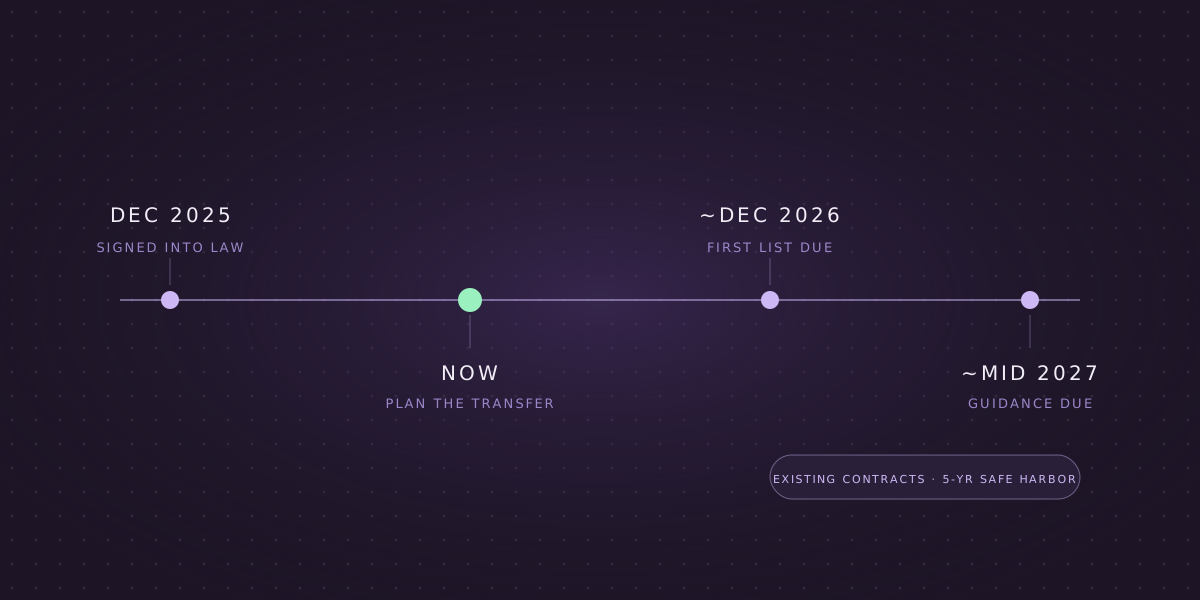
The BIOSECURE Act became law on December 18, 2025, as Section 851 of the 2026 National Defense Authorization Act. It limits US government procurement from, and grants to, “biotechnology companies of concern”. The first list of those companies is due about a year after enactment, with implementing guidance roughly six months later.
The law is narrower than the headlines suggest. Existing contracts with companies later designated get a five-year safe harbor, and some prominent contract research and manufacturing firms aren’t currently subject to its restrictions. But lawyers expect ripple effects: Akin Gump anticipates that listed companies will see commercial partners shift to other providers, even for work the law doesn’t directly cover.
The risky part is the handoff
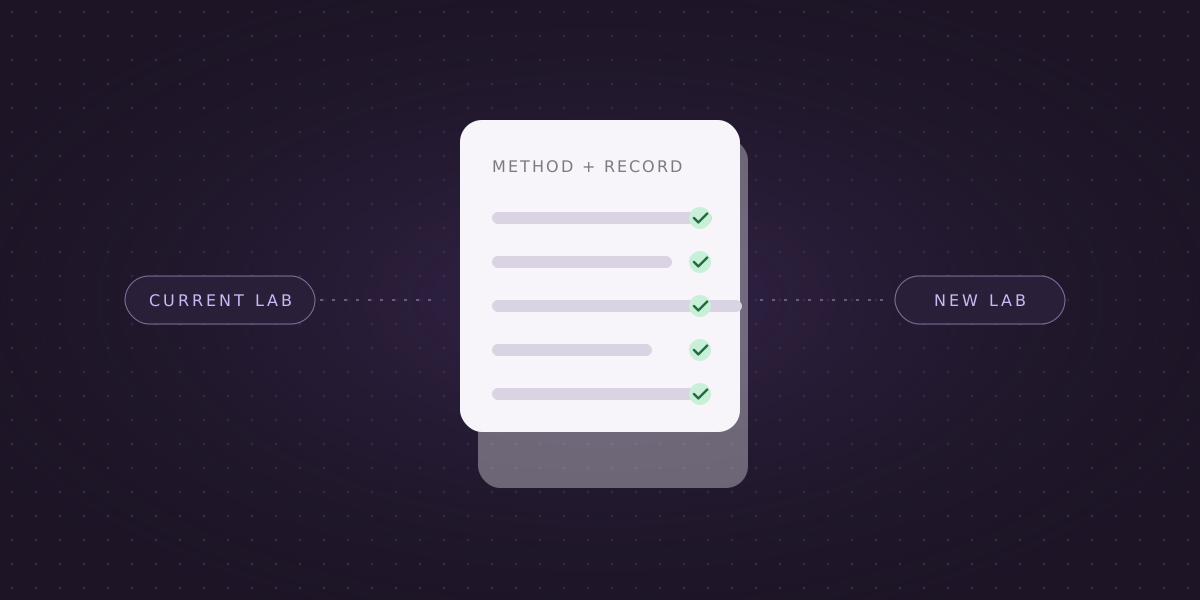
When a sponsor moves a program, the contract is the easy bit. Advisers already recommend adding termination rights and technology transfer provisions to supplier contracts. A clause can require the old provider to hand over documents. It can’t make them hand over what was never written down.
The evidence on that gap is sobering. When the Reproducibility Project: Cancer Biology repeated published experiments, 67% of protocols needed modification once the work began — and those were methods the original authors had already published.
The protocol travels easily. The know-how doesn’t.
What to ask for before you move
- Run records, not just SOPs. Time-stamped records of recent runs, including deviations and how they were resolved.
- The critical steps on video. Mixing, timing and handling are easier to see than to describe.
- Materials and instruments. Reagent lots, equipment and settings used in the runs that produced your data.
- A side-by-side run. Have the receiving lab run the method with the same capture, so the two can be compared step by step.
For receiving labs, this is an opening
Labs picking up transferred work have a chance to set the standard. A lab that guides each step and produces a verified run record from day one can show a sponsor, quickly, that the method has landed. That’s the kind of partner Augmentiv is built to support — we work with CROs, not against them. See how Augmentiv works for labs →
- Latham & Watkins. “BIOSECURE Act becomes law, limiting grants with ‘biotechnology companies of concern’.” Client alert (2026).
- Akin Gump. “BIOSECURE Act becomes law.” Client alert (Dec 2025).
- Baker McKenzie. “United States: The BIOSECURE Act becomes law.” (Jan 2026).
- Errington, T. M. et al. “Challenges for assessing replicability in preclinical cancer biology.” eLife 10, e67995 (2021).