Documentation is eating the lab’s day
The people best at running experiments spend a huge share of their time writing about them. It doesn’t have to be that way.
Ask an experienced lab operator how they spend their day and you’ll hear a familiar answer: a lot less time at the bench than you’d think. The rest goes to writing things down — batch records, notebook entries, deviation reports, transcriptions into electronic systems.
The burden isn’t limited to industry. In the Federal Demonstration Partnership’s 2018 Faculty Workload Survey, federally funded U.S. researchers reported spending 44.3% of their research time on administrative requirements rather than research itself. Inside labs, the operators we speak with consistently tell us documentation takes a large share — often around half — of their working day.
Why the paperwork exists
Documentation isn’t bureaucracy for its own sake. It’s how labs meet quality standards, satisfy clients and regulators, and make work reproducible. Regulated work has clear expectations: the FDA asks that records be attributable, legible, contemporaneously recorded, original and accurate, and nonclinical studies follow Good Laboratory Practice rules for raw data and records.
The problem isn’t that labs document. It’s how. Most records are still written by hand or transcribed after the fact, by the same skilled people the lab needs running experiments.
The hidden costs
- Lost capacity. Every hour spent writing is an hour the bench and its equipment sit idle.
- Errors. Records written from memory miss details, and transcription introduces new mistakes.
- Interrupted work. Stopping mid-protocol to write things down breaks concentration at exactly the moments that matter.
- Slow training. New staff learn protocols from documents written for auditors, not for people learning the work.
Recording as a by-product
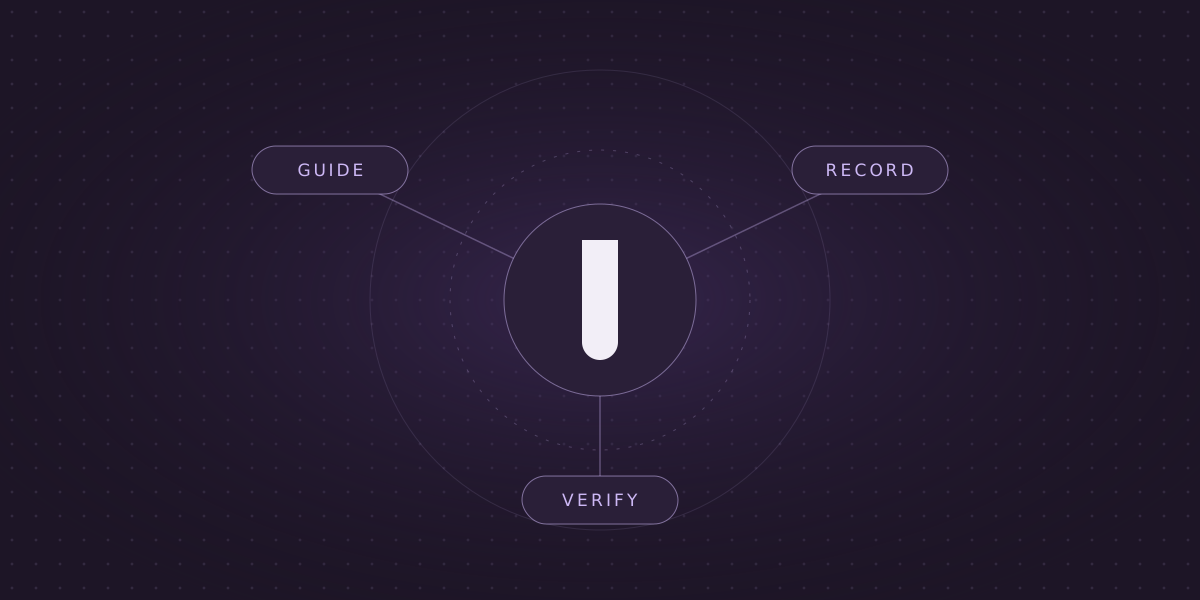
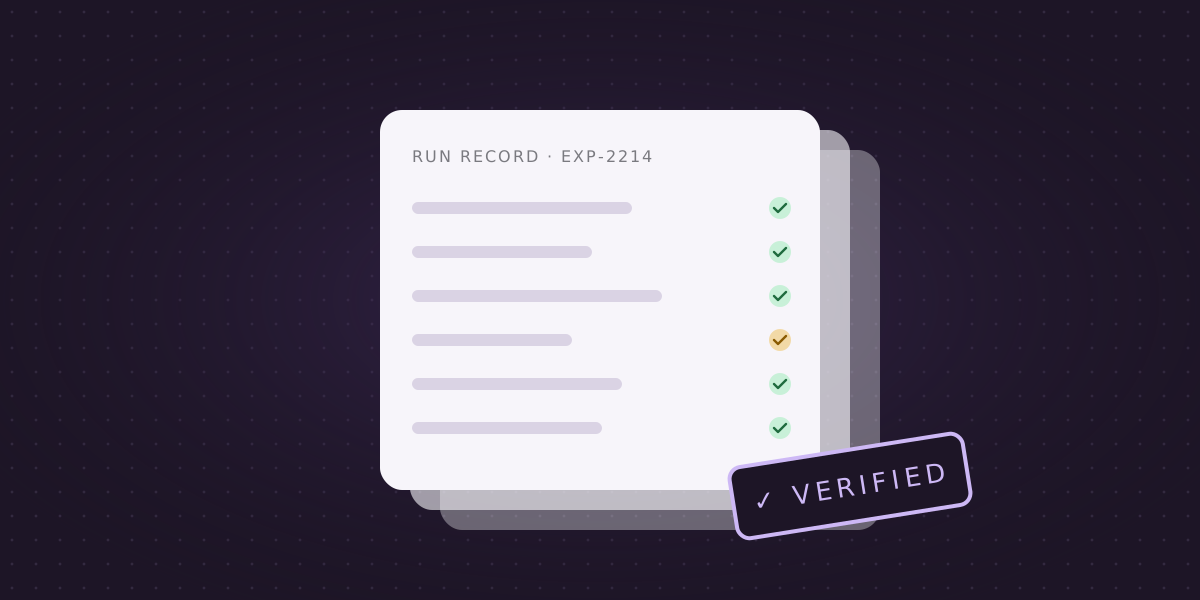
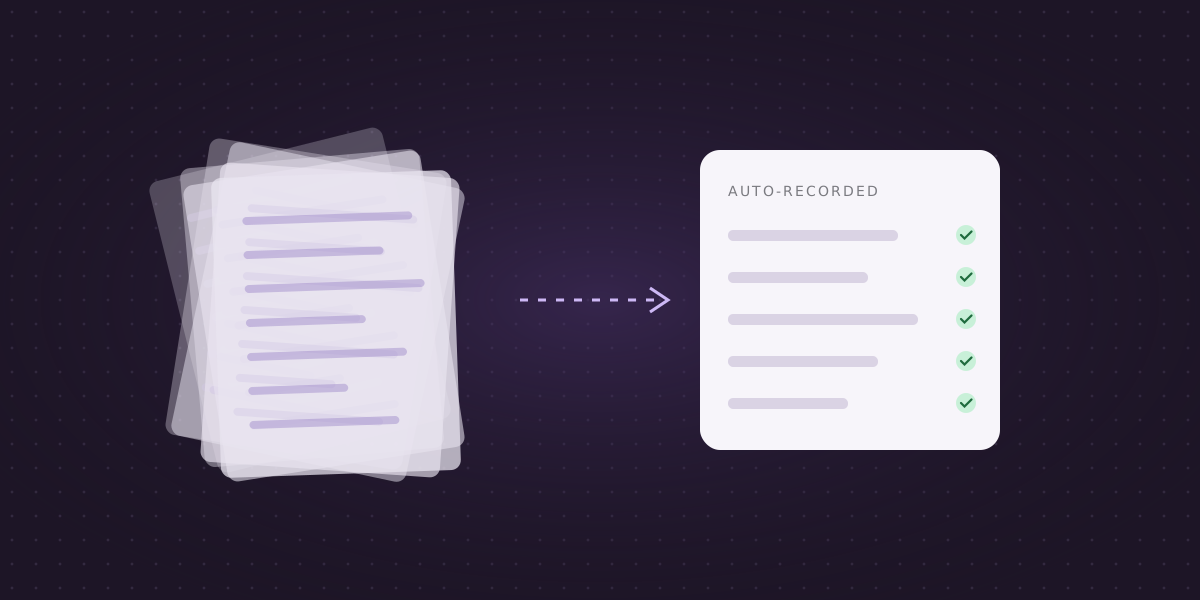
Augmentiv flips the order. Instead of doing the work and then writing it up, operators follow step-by-step guidance on a tablet while a camera records each step. The verified run record is produced automatically — complete, time-stamped and linked to the protocol.
The best documentation is the kind nobody has to write.
Guidance that trains as it goes
Because every protocol is broken into clear, visual steps, junior staff can take on expert work with confidence, and senior scientists spend less time supervising and correcting. The same guidance that produces the record also shortens the path to proficiency.
A day, rewired
Consider a typical assay day. Before: the operator prints the protocol, works through it with a pen in hand, pauses to note timings and lot numbers, then spends the end of the day transcribing everything into a notebook or electronic system — and answering questions from QA about entries that are hard to read or missing.
After: the protocol is on a tablet. Each step is captured as it happens, with timings recorded automatically and deviations logged the moment they’re caught. At the end of the day, the record is already complete. The operator’s last hour goes to the next experiment, not the last one.
What it means for quality teams
Quality reviewers spend less time chasing missing entries and deciphering handwriting, and more time on the questions that matter. Because every step is time-stamped and linked to video evidence, reviews can focus on genuine deviations rather than on reconstructing what probably happened.
What labs do with the time back
The hours saved don’t disappear — they become capacity. Labs can run more experiments with the people and equipment they already have, and take on work they previously had to turn away.
See how labs work with Augmentiv →